Amy Walsh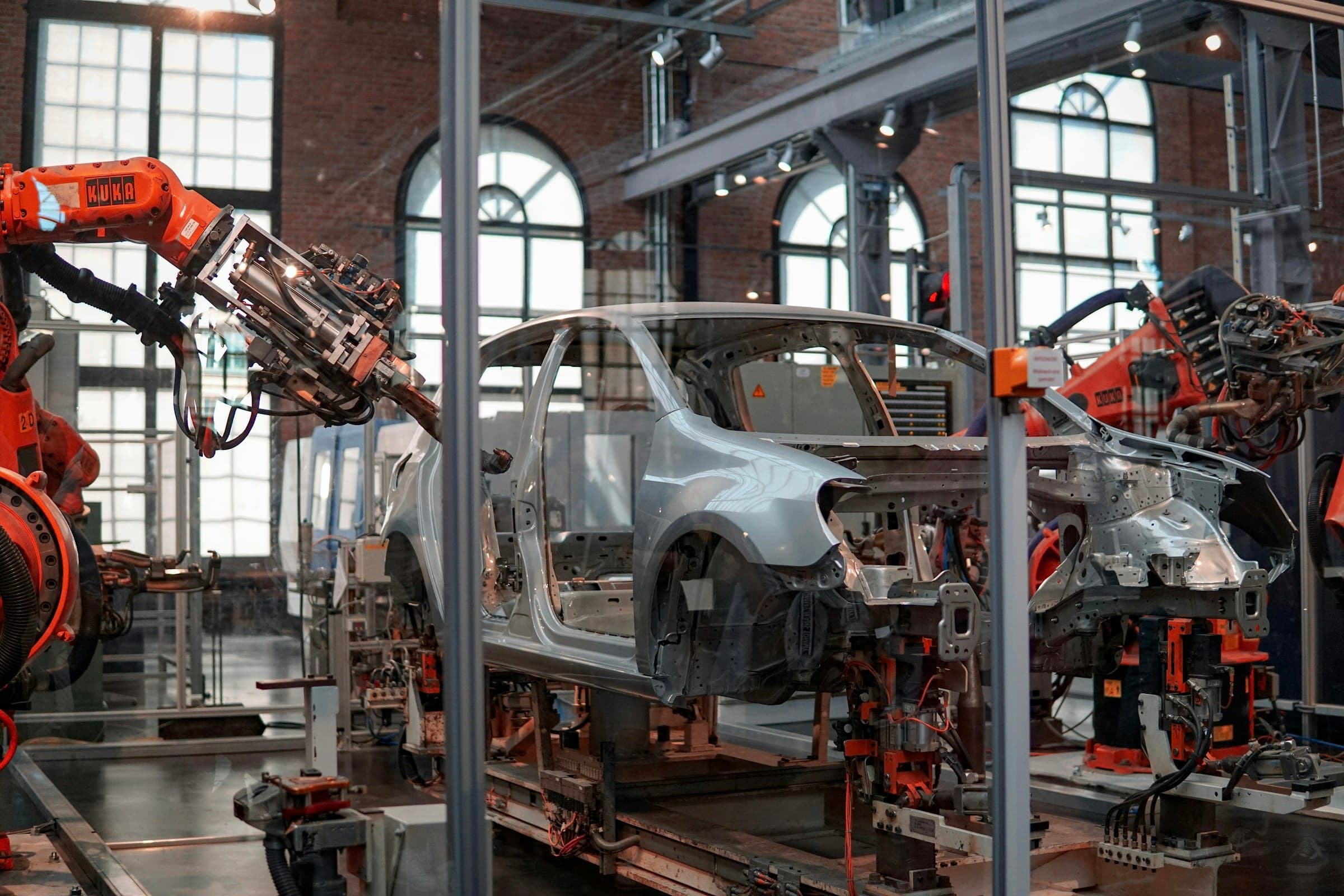
The numbers tell a different story than the headlines suggest: Chinese-made EVs' share of the EU market fell from 22% to 17% after Brussels slapped tariffs of up to 35% on imports from China. Read that as a win for European industry, and you'd be half right. The other half is sitting in the Zona Franca industrial park in Barcelona, where a Chinese automaker is now building 50,000 cars a year on the same assembly line Nissan walked away from in 2021 — badge changed, ownership changed, jobs only partially restored.
Chery isn't the only one. Ford and Geely just signed a joint venture to build cars in Valencia starting in 2028. Volkswagen is reportedly in talks — officially denied — to hand part of its Dresden plant to BYD. Nissan is negotiating a sublease of its Sunderland site to Chery. The tariff was designed to keep Chinese-made cars out of Europe. It did something closer to the opposite: it convinced Chinese manufacturers to stop exporting to Europe and start building here instead.
The Tariff Paradox: Why 35% Sank SAIC While 17% Doubled BYD
Here's the detail that gets lost in the "Europe protected its industry" narrative: the tariff doesn't hit every Chinese brand the same way, and the brands are responding accordingly. SAIC (MG), which pays the full 35% rate, has seen its EV imports to Europe nearly cut in half between 2023 and 2025. BYD, assessed at just 17%, has more than doubled its imports over the same stretch — and is already threatening Tesla's lead across parts of Europe (see our coverage of the Seagull's run at the Model Y).
If you follow the money, the logic snaps into focus: the tariff rewards whoever localizes fastest and punishes whoever doesn't. That's a strange incentive for a policy meant to slow Chinese market share, and it shows up in a second number too — plug-in hybrids, which the tariff doesn't touch at all, saw Chinese brands' share jump from 3% to 13%. There's also a loophole nobody's talking about enough: battery imports from China, taxed at just 1-3%, are up sevenfold since 2020. The car can carry a European nameplate. The cell inside it, more often than not, is still Chinese.
Barcelona to Sunderland: Mapping China's New European Footprint
I drove the Omoda 5 outside Barcelona this summer, on the same stretch of Zona Franca tarmac where Nissan vans used to roll off the line. It's a competent car — nothing that makes headlines, nothing that embarrasses itself either. What it's not is a rounding error: Chery, through its Omoda/Jaecoo brand and the Ebro-EV Motors investment vehicle, has been building there since November 2024, backed by €400 million in public-private investment. Target: 50,000 units in 2026-2027, scaling to 150,000 by 2029.
Barcelona isn't an isolated case — it's the most visible entry in a list of at least ten Chinese-backed plants announced across Europe since September 2023, according to Transport & Environment: Spain, Hungary, Austria, Belgium, and Slovakia all have deals in some stage of construction or negotiation.
| Deal | Status (August 2026) | Timeline |
|---|---|---|
| Chery – Barcelona (Zona Franca) | Producing, €400M invested | Operating since Nov. 2024 |
| Ford-Geely – Valencia (Almussafes) | Signed JV (Ford 66% / Geely 34%) | Production from 2028 |
| BYD – Dresden (ex-Volkswagen) | Reported talks, officially denied by VW | Unconfirmed |
| Chery-Nissan – Sunderland | Non-binding agreement for Line 1 | Targeting FY2027 |
The real story isn't the car, it's the strategy: these four deals get lumped together in headlines, but they're not remotely at the same stage. Chery in Barcelona is producing cars right now. Ford-Geely in Valencia is a signed contract with a public equity split. Sunderland is a stated intention without a final signature. BYD in Dresden, despite the coverage it's gotten, is a rumor Volkswagen has called flatly "incorrect." Treating all four as equivalent is the single most common error in how this story gets covered.
The Jobs Math Nobody's Running
"The plants stay open, the jobs stay put" is the easy headline. It's only true if you don't run the numbers.
When Nissan closed Barcelona in 2021, it wiped out 3,000 direct jobs and an estimated 20,000 indirect ones across suppliers, logistics, and repair shops. Chery is now announcing 1,200-1,250 direct jobs in its initial phase. Its own stated target of reaching 3,000 — parity with what was lost, not an improvement on it — doesn't land until 2030. Nine years after the closure. And none of the public plans account for the 20,000 indirect jobs at all.
Selling that as an industrial victory is, at best, premature. It's also not unique to Barcelona: Stellantis has idled its Mirafiori plant for weeks at a stretch, running at roughly 20% of capacity — the same overcapacity problem that explains why Ford needed a partner for Valencia in the first place. Spain's CCOO union has framed Geely's arrival as an opportunity, conditional on the work "not being limited to basic assembly" — a reasonable ask, and also a tacit admission that the risk of exactly that is real. The building reopened. The employment base it once supported hasn't.
Volkswagen's Contradiction: Lobbying for Tariffs While Courting BYD
Let's zoom out to the part no corporate press release is going to spell out for you. Volkswagen is pushing Brussels to extend tariffs to Chinese plug-in hybrids, which already command close to 30% of that segment in Europe according to Carwow Spain. At the same time — unconfirmed officially — Volkswagen is reportedly negotiating to hand part of its former Transparent Factory in Dresden over to BYD, a move that echoes what we flagged when covering the €25,000 ID.2 and its CATL batteries built in Martorell. CEO Oliver Blume has gone as far as calling idle-capacity-sharing arrangements with Chinese manufacturers a "smart solution."
Volkswagen has publicly denied it. I haven't been able to independently verify the terms of that negotiation, so take it for what it is: reported, not confirmed. Compare that to Ford-Geely, a signed, public deal with no ambiguity attached, and the contrast is telling. One manufacturer is lobbying for protection in public while quietly weighing a seat at the table with the company it wants blocked.
What This Means for Buyers and the Industry
What this means for your wallet is straightforward: Chinese-made BEVs remain, on average, 21% cheaper than their European equivalents even with the tariff in place. That gap isn't closing anytime soon — not with battery imports exempted and PHEVs untouched entirely.
What it means for the industry is messier. Tariffs were sold as a way to buy time for European automakers to catch up on cost and battery technology. What they've actually bought is a wave of joint ventures and plant handovers that keep the assembly jobs — mostly — while shifting the equity, the engineering decisions, and the margin further east. Barcelona's production line is still welding steel. Who owns the process at the other end of that line is a different question, and it's the one investors and policymakers should be asking instead of counting factories as wins. The badge on the hood tells you less than it used to about who's actually running the business behind it.