Amy Walsh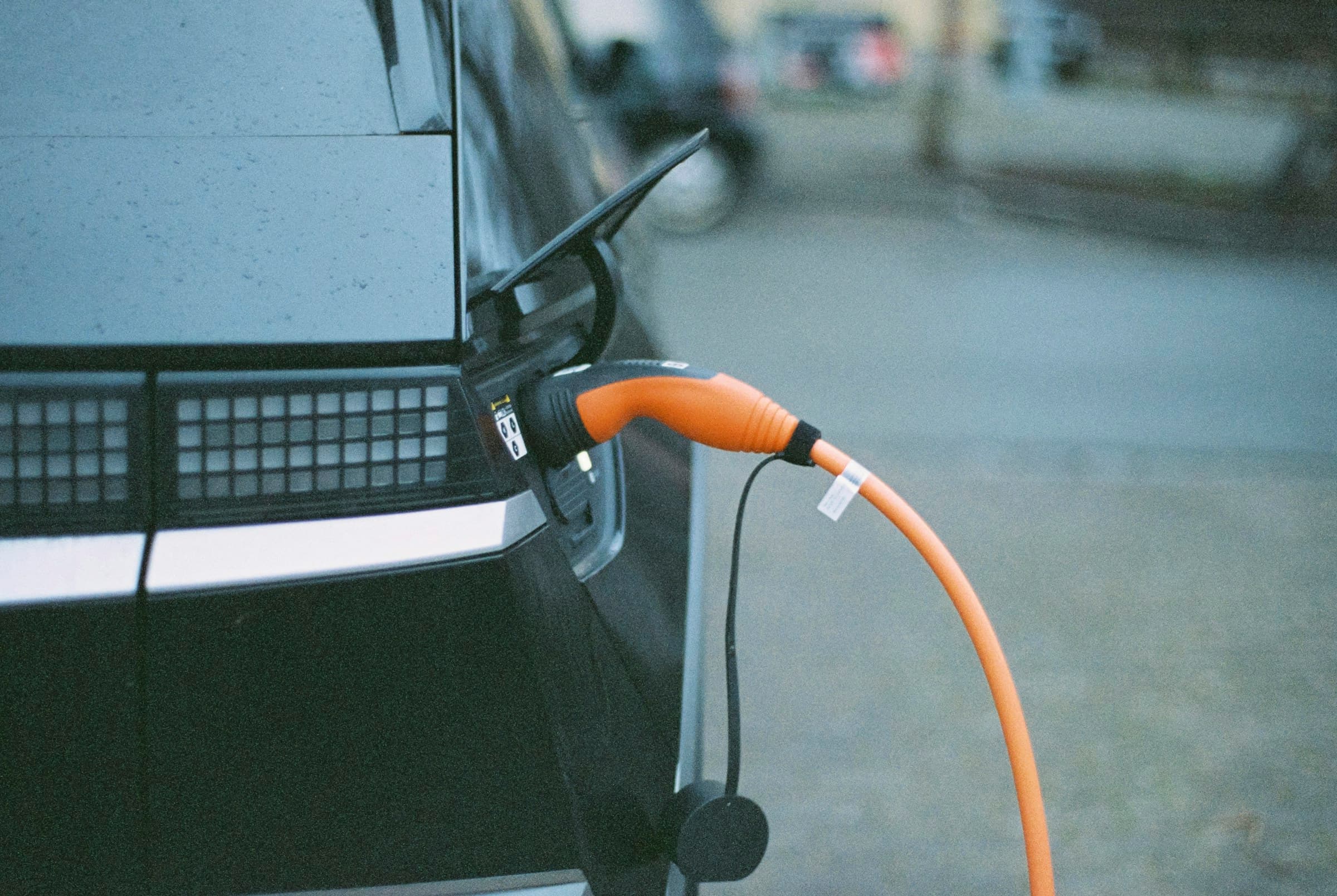
The battery nobody mentions in the press release
Honda's marketing says you'll save money going electric. The warranty fine print tells a different story.
The Honda PCX 125 has been Europe's top-selling scooter since 2018—47,000 units sold in 2025 alone. It works because the value proposition is bulletproof: Japanese reliability, 100 mpg fuel economy, $4,100 entry price. Nothing fancy, just transportation that doesn't break.
Now Honda announces the electric PCX for 2027 at an estimated $8,000-8,500. The pitch is familiar: lower fuel costs, minimal maintenance, unrestricted city access. What they don't lead with: the battery replacement cost that obliterates your savings.
Here's what the industry data shows for comparable electric scooters (NIU NQi Pro, BMW CE 04): a 4.5 kWh battery pack replacement runs $2,000-2,700 out of warranty. The warranty? Five years. Right when most buyers hit 20,000-25,000 miles and expect another 5-10 years of service, you're looking at a repair bill that costs 70% of a used gas PCX's entire value.
A 2022 PCX 125 with 9,000 miles sells for $2,600-2,800 on the used market. The electric model's battery alone costs nearly the same as a complete, functional gas scooter. When replacement parts cost more than the alternative product, you don't have a business model—you have a subscription service disguised as ownership.
Let me walk through the real TCO, because the marketing materials conveniently skip this part.
Why Honda's math doesn't add up for commuters
The numbers work beautifully in the press release. They fall apart when you model actual ownership.
Typical PCX usage in urban markets: 2,800 miles per year (ACEM data for European scooter segment). That's the commuter profile—home to work, errands, short trips. The gas PCX gets 100 mpg combined. At $3.50/gallon (U.S. average), fuel cost per 100 miles: $3.50.
The electric model packs a 4.5 kWh battery with 50-60 mile real-world range. Energy consumption: roughly 3.1 kWh per 100 miles. At $0.16/kWh (U.S. residential average), electricity cost per 100 miles: $0.50.
Fuel savings per 100 miles: $3.00. Annual fuel savings at 2,800 miles: $84.
Maintenance tells a better story for electric. The gas PCX needs oil changes, filters, drive belt service, valve adjustments—call it $250/year for proper service. The electric model drops to tires and brake pads: maybe $100/year. Annual maintenance savings: $150.
Total annual operating savings: $84 (fuel) + $150 (maintenance) = $234 per year.
Now the purchase premium:
- PCX Electric: $8,000 (estimated U.S. price)
- PCX 125 gas: $4,100
- Price delta: $3,900
- Federal EV credit: $0 (two-wheelers don't qualify)
- Some states offer credits ($500-1,500), but most don't
- Net premium: $3,900 (best case $2,400 with max state incentive)
Payback at national level: $3,900 ÷ $234 = 16.7 years. With max state incentive: 10.3 years.
That's before the battery replacement. At year 5, you'll face a $2,700 bill (based on current market data for 4.5 kWh packs). Your five years of operational savings: 5 × $234 = $1,170. The battery replacement wipes out all savings and puts you $1,530 in the hole.
By year 10, if the scooter survives, you'll need a second battery. Even in the best-case scenario with state incentives, the electric PCX costs more over a decade than gas.
| Item | PCX 125 Gas | PCX Electric | Delta |
|---|---|---|---|
| Purchase price | $4,100 | $8,000 | +$3,900 |
| State incentive (max) | $0 | -$1,500 | -$1,500 |
| Net upfront | $4,100 | $6,500 | +$2,400 |
| Operating cost per 100 mi | $3.50 | $0.50 | -$3.00 |
| Maintenance annual | $250 | $100 | -$150 |
| Annual savings (2,800 mi) | — | $234 | — |
| Battery replacement (yr 5) | $0 | $2,700 | +$2,700 |
| 10-year TCO (2,800 mi/yr) | $6,600 | $8,840 | +$2,240 |
Looking at the sales data, Honda's positioning this as an environmental choice, not an economic one. That's honest, at least. But the marketing language around "savings" misleads buyers who don't model out the battery lifecycle cost.
The infrastructure gap that breaks the business case
The TCO assumes you can actually charge the thing. For most urban riders, that's not a given.
Here's the scenario Honda's product planners apparently didn't consider: you live in a city apartment with shared parking. You want to charge overnight. Problem: charging infrastructure for two-wheelers is nearly nonexistent in U.S. cities. Installing a dedicated outlet in shared parking requires building approval, electrical work ($800-1,500), and months of committee meetings. If you get approval at all.
The alternative—street charging—doesn't exist for motorcycles and scooters. EV charging stations are designed for cars. Parking a scooter there for 4-6 hours (full charge time) isn't viable or legal in most jurisdictions.
The PCX Electric uses a fixed battery—not removable. You can't carry it upstairs to your apartment like NIU or Gogoro riders do. You're locked into garage charging. In 2027, with urban electrification still in early stages, this design choice makes zero practical sense for the target buyer.
(Honestly, this feels like a product designed by engineers who've never parked a scooter in a city.)
The 50-60 mile real range works fine for daily commuting—until it doesn't. Weekend trip out of town? Visiting family two counties over? Forget it. The gas PCX carries 2.1 gallons and delivers 200+ mile range. Refueling takes 90 seconds at any of 150,000 U.S. gas stations.
The electric model forces you to plan every route, hunt for charging (which doesn't exist for scooters), and wait hours for a full charge. It's 2027 and we're still selling electric urban vehicles without the urban infrastructure to support them.
Who this scooter actually makes sense for (hint: not you)
The target market for a $4,100 urban scooter can't afford an $8,000 one. The market that could afford it doesn't need what it offers.
The typical PCX buyer: urban commuter, moderate income, looking to save vs. car ownership or public transit. Low annual mileage (2,800 miles), tight budget, high probability of shared parking with no charging access. Exactly the profile that can't absorb a $3,900 price premium or a $2,700 battery replacement at year five.
The users who could actually amortize an electric scooter: delivery riders, couriers, fleet operators running 9,000-15,000 miles per year. At that mileage, annual operating savings jump to $750-1,200, making payback viable.
But those professional users need:
- 120+ mile range for full shifts without charging breaks
- Fast charging or swappable batteries (can't lose work hours waiting)
- Absolute reliability (their income depends on it)
The PCX Electric delivers none of that. Fixed battery, 60-mile range, 4-6 hour charge time. It's engineered for a customer segment that can't pay for it, and useless for the segment that could.
What this means for your wallet: unless you're buying purely for environmental reasons and can afford to lose $2,000-3,000 over the ownership cycle, the gas PCX remains the rational choice. Boring? Absolutely. But it works, it's cheap, and it won't surprise you with a $2,700 parts bill at year five.
If Honda wanted to build an electric urban scooter that actually made sense, they'd need:
- Removable battery (like Gogoro, Kymco) so you can charge at home
- Price target of $5,500 max to compete post-incentive with gas model
- Battery swap network (the Honda-Yamaha-Suzuki-Kawasaki consortium exists on paper since 2019, but there's zero U.S. rollout)
- 8-year/30,000-mile battery warranty to eliminate resale value uncertainty
Until then, if you need reliable urban transportation that doesn't cost double for the privilege of plugging in, the answer is still the same: PCX 125 gas. It's not exciting. But it's honest about what it costs.