Tom Jennings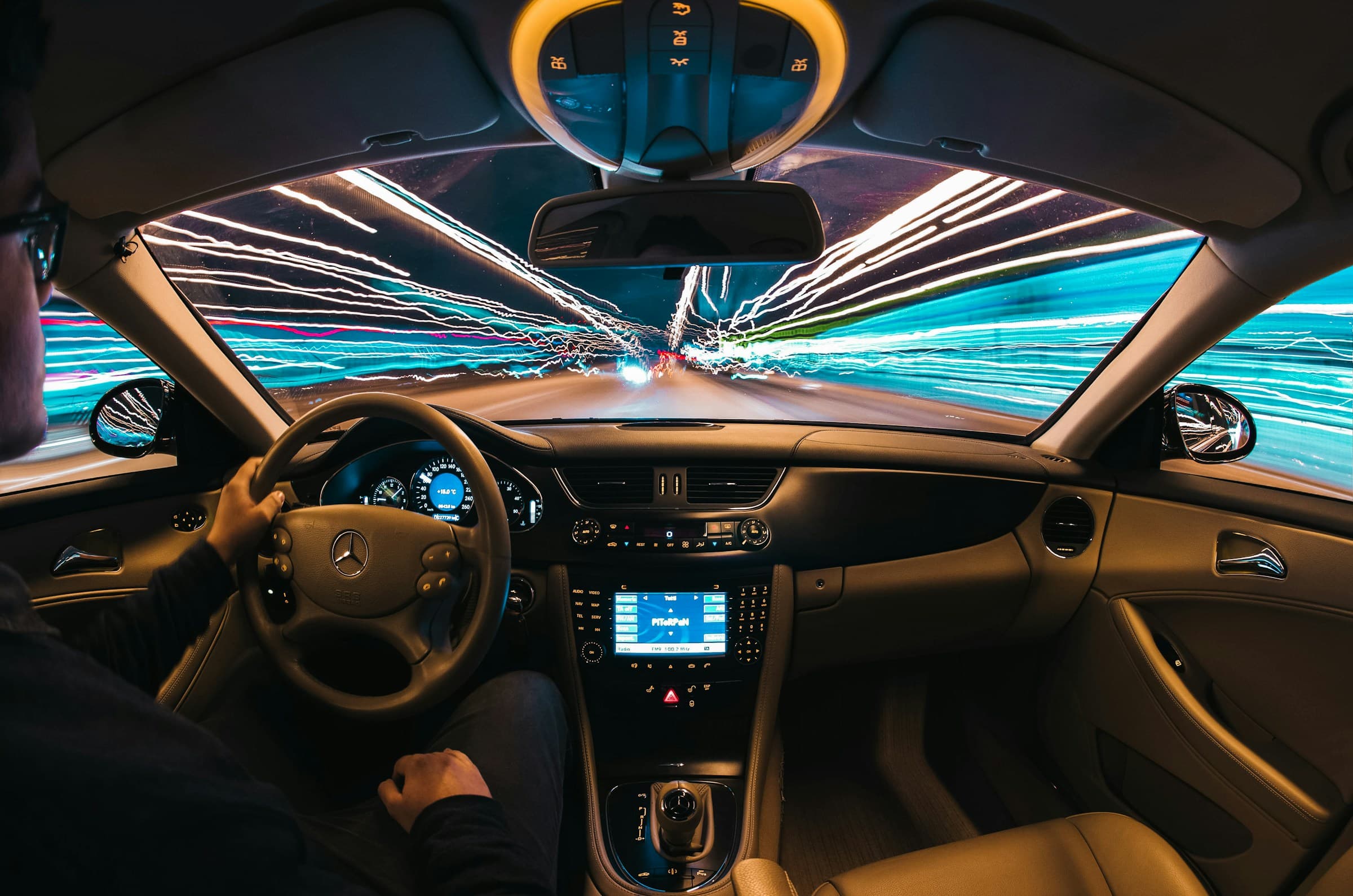
Here's what history teaches us: why Level 3 failed before it launched
If you trace the lineage back to the first wave of autonomous driving promises in 2016-2018, you'll notice a pattern: every OEM overpromised and underdelivered. Tesla's "Full Self-Driving by 2017." GM's "no steering wheel Cruise by 2019." Audi's Traffic Jam Pilot that launched in Germany and was quietly discontinued when nobody bought it.
Mercedes-Benz Drive Pilot is the latest chapter in that story. Spain just approved it for highway use up to 130 km/h (80 mph), making it the most permissive Level 3 regulation in Europe. Technically, this is a milestone: you can legally take your hands off the wheel, watch Netflix, and let Mercedes assume full liability while the system is active.
The German market data after 18 months? Only 3-5% of eligible buyers activate Drive Pilot after purchase, according to dealership reports to Automotive News Europe in September 2025.
That's not a marketing problem. It's a value proposition problem.
The evolution tells a story: Level 3 represents the awkward middle ground between driver assistance (Level 2) and full autonomy (Level 4). You're legally allowed to disengage, but the system's operational domain is so constrained that most drivers revert to conventional driving rather than deal with constant handover requests.
Having maintained platforms across multiple ADAS generations since the first adaptive cruise systems in the early 2000s, I've watched this technology mature from basic radar cruise to today's sensor-fusion stacks. Drive Pilot is technically brilliant — and commercially premature.
Spain's approval allows 130 km/h operation vs Germany's conservative 60 km/h limit, theoretically expanding the system's usefulness. But speed limits weren't the problem in Germany. Weather constraints, geographic coverage gaps, and the $8,200 price tag were.
Under the skin: the sensor stack that breaks the Level 3 promise
Drive Pilot is an optional system costing €6,500-€7,500 in Germany (approximately $7,100-$8,200 USD). Mercedes hasn't announced Spanish pricing, but dealership estimates suggest the upper end of that range.
For that investment, you get one of the most sophisticated sensor arrays ever fitted to a production vehicle:
- 1 front-mounted LiDAR (Luminar Iris): 3D mapping to 250 meters, the single most expensive component
- 5 cameras (2 stereo front, 1 rear, 2 side): 360° redundant vision
- 6 radars (4 long-range, 2 short-range): multi-spectrum detection independent of lighting
- 12 ultrasonic sensors: proximity detection under 5 meters
- HD mapping system with OTA updates via 5G connectivity
- External microphones: emergency vehicle siren detection (required by German regulation)
- Windshield moisture sensor: continuous precipitation monitoring
The redundancy is legally mandated for Level 3: if any sensor fails, the system must continue operating safely with backups or execute a minimal risk condition (safe stop). Every sensor has a redundant partner.
What most reviews miss is the engineering DNA: this sensor stack shares architecture with experimental autonomous platforms dating back to Mercedes' 2013 S-Class "Intelligent Drive" cross-country demo. The core sensor fusion algorithms have been in development for over a decade.
But all that hardware creates a repair nightmare.
In my decades of working on these platforms, I've seen how conventional ADAS (Level 2) already complicated bodywork repairs. Drive Pilot takes complexity to another level. A minor front-end collision that would require basic bumper repair and paint on a standard E-Class now potentially involves:
| Repair Type | Standard E-Class | E-Class + Drive Pilot |
|---|---|---|
| Minor front impact | Bumper repair + paint | + Sensor recalibration |
| Affected components | Basic parking sensors | LiDAR + stereo cameras + radars |
| Shops equipped | Any certified body shop | Only specialized centers with calibration rigs |
| Estimated repair cost | $1,500-$2,500 | $4,000-$7,000 (if LiDAR damaged) |
Some German insurers (Allianz, HUK-Coburg) started adding surcharges for Level 3-equipped vehicles in mid-2024. The actuarial logic is straightforward: higher repair complexity equals higher claims costs.
The LiDAR unit alone costs approximately $1,000-$1,500 as a replacement part, and it requires factory-spec calibration after installation. Many independent shops don't have the Mercedes STAR diagnostic system with Drive Pilot calibration software, forcing owners to dealership service centers.
If you're considering an E-Class with this option, understand that any front or side collision will require specialized calibration and possibly component replacement that standard body shops can't handle.
The adoption paradox: why German buyers reject legal autonomy
Spain's regulatory approval allows Drive Pilot operation up to 130 km/h on highways with physical median barriers. That's 2.2x faster than Germany's 60 km/h limit, theoretically making the system useful in real highway traffic rather than just congestion.
But speed limits weren't the core constraint. Weather and geography were.
Conditions that automatically DISABLE Drive Pilot:
| Condition | Technical Limit | Real-World Impact |
|---|---|---|
| Rain | >2 mm/h precipitation | Common on Atlantic/northern routes |
| Fog | Visibility <200 meters | Frequent winter mornings |
| Snow/ice | Any accumulation | Common elevated areas, winter |
| Temperature | <0°C ambient | Winter nights, mountain passes |
| Construction | Lane closures/detours | System can't recognize changes vs HD map |
| Unmapped roads | Highway not validated | Only specific segments approved |
The rain constraint is fundamental physics: LiDAR relies on infrared laser pulses that scatter in water droplets, degrading 3D mapping precision. Stereo cameras also lose contrast in heavy rain. Mercedes could have calibrated the system for light rain operation, but chose the conservative approach: when in doubt, disengage.
The mapping constraint is equally limiting. Drive Pilot only operates on highways Mercedes has pre-driven with HD capture vehicles, generating centimeter-accurate maps of every lane, sign, banking angle, and exit. That process takes months per segment.
In Germany, Drive Pilot has gradually expanded Autobahn coverage over 18 months. Spanish launch will likely start with:
- AP-7 (Barcelona-Valencia-Alicante): Mediterranean corridor, frequent dense traffic
- A-1/A-2 (Madrid-Burgos / Madrid-Zaragoza): northern and eastern exits from capital
- A-4 (Madrid-Seville): high-traffic southern route
If you live in Galicia, Asturias, Extremadura, or much of inland Andalusia, Drive Pilot will be disabled on most of your local highways until Mercedes completes mapping. There's no public timeline for when that will happen.
Compare real-world usability:
| Aspect | Tesla FSD (Level 2) | Mercedes Drive Pilot (Level 3) |
|---|---|---|
| Geographic coverage | City + highway + secondary roads | Only pre-mapped highways |
| Lane changes | Autonomous without intervention | Lane-keeping only |
| Attention required | Hands on wheel + visual monitoring | None (secondary activities allowed) |
| Legal liability | Driver always | Mercedes (under valid conditions) |
| Weather limits | Operates in light rain | Disabled >2mm/h rain |
| Cost | $8,000 purchase / $99/month | $7,100-$8,200 one-time |
Which would you choose?
If your weekly commute is Barcelona-Valencia during daytime in good weather, Drive Pilot gives you 2-3 hours of genuine productivity. If your driving is mixed (city, secondary highways, variable schedules), Tesla FSD provides broader geographic coverage despite requiring supervision.
Spain vs Germany: regulatory divergence that changes nothing
The technical distinction between Level 2 and Level 3 isn't about sensors or algorithms — it's about legal liability. According to SAE J3016 classification:
Level 2 (Partial Automation):
- System controls acceleration, braking, and steering simultaneously
- Driver supervises constantly and retains full legal responsibility
- Examples: Tesla Autopilot, BMW Highway Assistant, GM Super Cruise
Level 3 (Conditional Automation):
- System assumes complete Dynamic Driving Task under specific conditions
- Driver does NOT supervise, can perform secondary activities
- Manufacturer assumes legal liability during system activation
- Driver must be ready to resume control within ~10 seconds when requested
That legal difference is revolutionary... in theory. In practice, manufacturer liability only applies when:
- The system was actively engaged (dashboard shows green Level 3 indicator)
- Operating conditions were valid (mapped highway, permitted weather)
- Driver resumed control within the mandated timeframe when requested
- Vehicle was maintained per Mercedes service schedule
If any of those conditions fail, liability reverts to the driver. Proving the system was active and conditions were valid after a crash requires Mercedes to provide vehicle logs. While Mercedes has publicly committed to assuming liability, the actual legal process hasn't been tested in European courts yet.
Spain's 130 km/h vs Germany's 60 km/h authorization sounds significant, but it doesn't address the fundamental constraints: weather sensitivity, mapping coverage gaps, and the premium price for limited operational domain.
Having wrenched on platforms from the first-generation radar cruise control through today's camera-radar-LiDAR fusion systems, I can tell you the technology works as designed. The problem isn't technical execution — it's the gap between marketing promises ("autonomous driving") and operational reality ("autonomous driving on pre-approved segments when weather is ideal").
The mechanic's verdict: wait for gen 2
Level 3 represents the future of highway driving, but this first-generation implementation arrives with too many asterisks attached.
The technology is mature. The regulation is in place. But the infrastructure (comprehensive mapping, stable 5G coverage, certified repair facilities) will take 3-5 years to reach critical mass across Spain.
Early adopters will pay $8,200 to beta-test a system that by 2029 will likely cost half as much and work in twice as many situations. If you're buying an E-Class now and the dealer offers Drive Pilot as an option, my advice based on platform history: wait for the second generation. Let the pioneers absorb the development costs.
By 2027-2028, the system will have:
- Broader geographic coverage as Mercedes completes highway mapping
- Improved weather tolerance through refined sensor fusion algorithms
- More competitive pricing as LiDAR costs decrease (Luminar has publicly committed to sub-$500 units by 2026)
- Established legal precedent from actual liability cases
- Wider network of certified repair facilities
Disclaimer: I haven't personally serviced a Drive Pilot-equipped vehicle in a Spanish facility yet, so some of my repair cost estimates are based on German colleague reports and published Mercedes service documentation.
The 3% German adoption rate tells you everything you need to know: even buyers who can afford $100,000+ luxury sedans recognize when a feature's real-world utility doesn't justify its cost.
Unless your daily commute is exclusively AP-7 Barcelona-Valencia in sunny weather, you'll enjoy the few dozen hours per year when the system actually operates in typical Spanish driving conditions.
For everyone else: bookmark this technology for your next car purchase in 2028. The engineering is sound. The business case isn't — yet.